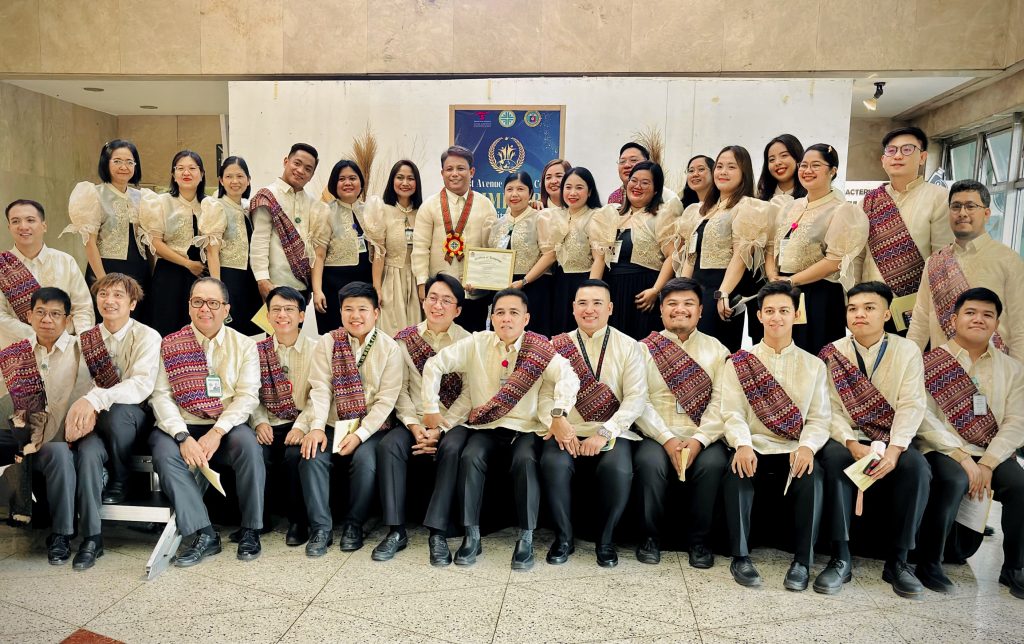
HUMAN RESOURCE MANAGEMENT
The Human Resource Management, like any other, had a very humble beginning. Yet, with its continuous striving for excellence, it had successfully overcome barriers and had surmounted obstacles to fulfill its purpose and perform its designated role as part of East Avenue Medical Center.
It was July 21, 1994 when the Human Resource Management Office achieved the First Level II Accreditation by the Civil Service Commission as per CSC Resolution No. 944009. On May 28, 2013, the EAMC got the PRIME-HRM Revalidation Level II Accredited Status as per CSC Resolution No. 1301004 which reflects the department’s continuous adherence to high standards and unceasing drive towards improvement. On March 8, 2017, the department was awarded PRIME – HRM Maturity Level II on Recruitment, Selection, Placement, and Rewards and Recognition by the CSC. Level II signifies a process-defined HRM and receiving this accreditation means that the institution’s processes are attuned with the CSC’s requirements and that programs are performed and managed according to the documented processes. In fact, East Avenue Medical Center was among the 2 out of 22 DOH-retained hospitals together with the DOH Central Office in Metro Manila that was awarded Level II maturity in PRIME – HRM.
It was around 2010 when a new payroll system was developed to accelerate the process and increase employee access to their monthly pay through their ATM cards. Electronic Data System (EDS) was also established as part of the transition of human resource processes from manual to computerized. The transition increased the department’s productivity and efficacy, particularly in payroll processing and time-keeping, as it strengthens its adaptability in the modern era by utilizing various technologies for quality improvement. In addition, through the efforts of the HR Office, a UMID-compliant Kiosk was also put up in the office which enabled employees to freely access their GSIS accounts inside EAMC instead of going out using only their IDs.
The Selection process was also made more effective by establishing stricter criteria and a more objective method of evaluating applicants that are aligned with the CSC’s Qualification Standards in order to ensure better person-job fit. Strategies are becoming more centered on competency-based recruitment in order to ensure that selected applicants are skilled and proficient in the tasks they are set out to do. Recruitment methodologies at present also included computer and web-based technologies to broaden scope and attract more qualified applicants.
Under the Leadership of Ms. Jocelyn A. Francisco and the support of the Chief Administrative Officer, Mr. Jose C. Calixtro, and MANCOM, the HRMO was divided into different functional units namely: Recruitment / Selection/Promotion and Employee Relations Unit, Employment Appointment Preparation and Reports Unit, Attendance Monitoring and Records Unit, and Compensation/Benefit Wage and Salary Administration Unit. Assigned unit heads monitor and ensure that the unit operations are carried out and performed in an efficient and accurate manner. This strategic move increased the overall effectiveness of the office and enabled each staff to function autonomously despite their interdependence. In addition, it also established further the department’s integrality and motivated people to work towards a unified goal amidst distinction of roles.
Crisis management was perhaps one of the most daunting aspects of HRM’s role during the COVID pandemic. Communicating difficult decisions with transparency and empathy was essential to maintaining trust and morale during these turbulent times.
Throughout these challenges, HRM emerged as a critical pillar of support, guiding organizations through an unprecedented crisis with empathy, innovation, and resilience. With limited physical interactions HR Staff had to find creative ways. This meant fostering engagement through virtual activities and reinforcing flexible work arrangements anchored on CSC rules, digital transformation, and a heightened focus on employee well-being.
In the end, the COVID-19 crisis revealed the resilience and adaptability of HR practitioners. It was a time marked by extraordinary challenges, but also by innovation and transformation. The pandemic reshaped the future of work, leaving an indelible mark on the practice of Human Resource Management.
At present, the structure of the office was also redesigned to become a more conducive workplace and to be more aligned with the Wellness Program of the CSC. With the support from the management, the HRM continues to pursue its goal towards a Level III Maturity onwards on PRIME-HRM.
Through the years, the Human Resources Management has been true to its goal and objective. It has successfully kept up with modern demands by taking advantage of technological advancements, and has undergone quality and process improvements through the development of new practices and methodologies. With ongoing innovations and breakthroughs, the department, staffed with hardworking people and a dynamic leader, supported by our Chief Administrative Officer, Mr. Peter B. Luego, and the Management Committee, is now more prepared to face other challenges that lie ahead.